APOD: 2026 October 14 – Mars and the Beehive Under an Aurora
In today’s image, Mars joins the Beehive cluster below an auroral curtain and above a horizon of happy little trees near Lansjärv, Sweden.

NASA reports that in today’s image, Mars joins the Beehive cluster below an auroral curtain and above a horizon of happy little trees near Lansjärv, Sweden.
This science story centres on Sweden. Names and organisations mentioned in the coverage include Beehive Under, APOD and Mars.
Why it matters
Research developments are often early steps — further studies typically determine how significant they prove to be.
Key details
- Location
- Sweden · Europe
- Reported by
- NASA
- First reported
- Key names
- Beehive Under, APOD, Mars, Lansjärv
- Section
- Science
Sources
This is an independent summary. Read the full, original reporting from the publisher:
Read the full story at NASASpotted an error? Request a correction · How this summary was produced
Related Stories

Scotland beat Czechs to set up Sweden play-off
Watch the goals as Scotland twice come from behind to beat the Czech Republic 3-2 on Paisley and progress 5-2 on aggregate to a Women's World Cup…

Sweden’s centre-left leader fails in second bid to form government
Social Democratic leader Magdalena Andersson says 'conditions not in place' to form government, prolonging deadlock.

Beta Film-Sold ‘Queen Silvia’ Readies for Royal Premiere at Mipcom – and Follows a Girl Who Never Wanted to Marry a Prince: ‘It’s Not a Cinderella Story’
Beta Film’s “Queen Silvia” is world-premiering at Mipcom.
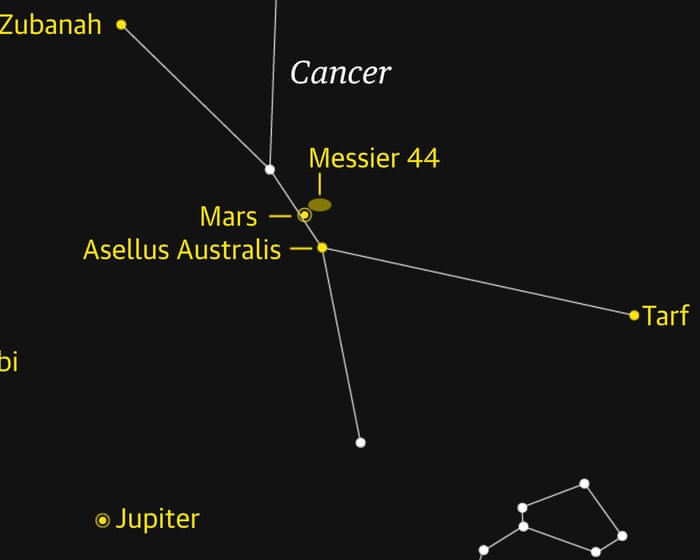
Starwatch: Mars signposts the beautiful Beehive cluster
From a dark location, the Beehive – or Praesepe – will appear as a faint, misty patch very close to the red planet The red planet, Mars, sails…
Gigantic prehistoric snake discovered in India may have been one of the largest ever
A massive prehistoric snake discovered in India may have rivaled the largest snake ever known.

World's oldest shipwreck found off coast of Turkey
Archaeologists say the wreck is up to 4,700 years old, dating to the Early Bronze Age.
A planet 320 light-years away confirms what scientists long suspected
Astronomers have discovered that a scorching-hot planet 320 light-years away shares a striking chemical similarity with its host star, providing the…
AI reveals a hidden chemical shortcut that could turn CO2 into fuel
Scientists used artificial intelligence to uncover nearly 10,000 chemical reactions involved in transforming carbon dioxide into fuels and…