Scientists say they have found fossilised red blood cells in a 115‑million‑year‑old dinosaur bone
Scientists say they have found fossilised red blood cells in a 115‑million‑year‑old dinosaur bone.
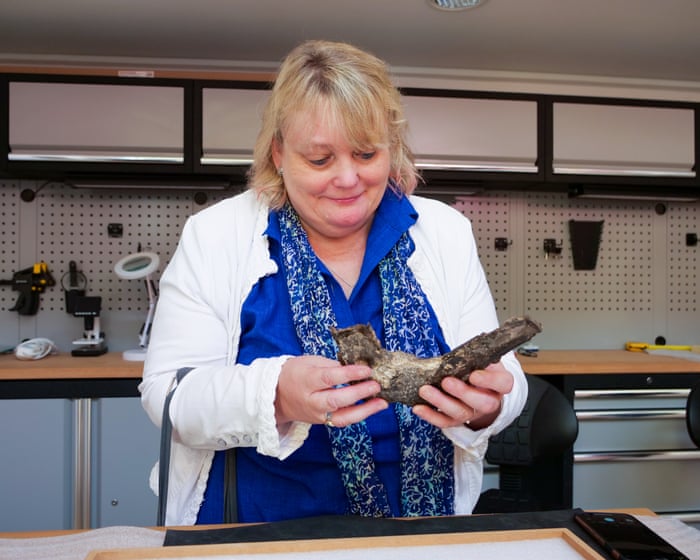
Scientists say they have found fossilised red blood cells in a 115‑million‑year‑old dinosaur bone. The Guardian reported that the discovery was made while examining the hind‑leg bones of a small meat‑eating dinosaur called Aratasaurus, which lived and died in what is now north‑eastern Brazil.
Chemical tests on the bone identified heme, the organic compound that allows haemoglobin in blood to carry oxygen around the body. The presence of heme led researchers to conclude that the structures they observed are fossilised red blood cells.
If confirmed, the find would represent one of the oldest examples of preserved blood components, offering a rare glimpse into the biology of Jurassic‑era creatures.
Why it matters
The discovery could provide new information about dinosaur physiology and the preservation of soft tissues over millions of years.
Key details
- Location
- Brazil · Americas
- Reported by
- The Guardian
- First reported
- Key names
- Aratasaurus, Jurassic Park
- Section
- Science
- Figure cited
- But that is what researchers are claiming to have discovered after analysing the hind leg bones of a small, meat-eating dinosaur called an Aratasaurus that lived and died in what is now north-eastern Brazil 115m… (The Guardian)
Sources
This is an independent summary. Read the full, original reporting from the publisher:
Read the full story at The GuardianSpotted an error? Request a correction · How this summary was produced
Related Stories

Rubio says Trump administration did not help Bolsonaro flee Brazil to US
Trump says defeated presidential candidate, who faces investigation in Brazil, can stay in the US 'as long as he wants'.

Brazil summons Argentinian diplomat over Bolsonaro’s flight to US
The move threatens to further strain relations between Brazilian President Lula and his Argentinian counterpart, Milei.

Flávio Bolsonaro’s brief self‑declaration as president‑elect draws ridicule
The Guardian reported that far‑right politician Flávio Bolsonaro attempted to brand himself Brazil’s “true president‑elect” for 58 minutes after…

Lula’s win in Brazil offers model for climate and democracy activists
Luiz Inácio Lula da Silva defeated far‑right challenger Flavío Bolsonaro in Brazil’s presidential runoff, The Guardian reported.

University of Cambridge scientist among those who died in Spanish train crash
Marta Shahbazi was an "inspiring, talented and passionate scientist", says the laboratory where she worked.

Cambridge developmental biologist dies in Spanish train crash
The Guardian reported that Dr Marta Shahbazi, an affiliate associate professor at the Cambridge Stem Cell Institute and a group leader at the…

'Fascinating' rare beetle found in Wales again after 60 years
It was feared The Short-Necked Oil Beetle had become extinct in Wales after recent surveys.

Why are US, Russia and China racing to put nuclear reactors on the moon?
Reactors could revolutionise moon exploration, providing energy for bases and mining, but risks of contamination remain.