Yale scientists discover how stress changes the brain to make memories stronger
Yale scientists have uncovered how the stress hormone cortisol helps the brain turn emotional experiences into stronger, longer-lasting memories.

ScienceDaily reports: Yale scientists have uncovered how the stress hormone cortisol helps the brain turn emotional experiences into stronger, longer-lasting memories.
The discovery reveals that stress can reshape communication between brain networks involved in emotion and memory, potentially explaining why certain moments are so difficult to forget.
This science story centres on the United States.
Why it matters
Scientific work like this adds to what we know and can inform future research, policy and technology.
Key details
- Location
- United States · Americas
- Reported by
- ScienceDaily
- First reported
- Section
- Science
Sources
This is an independent summary. Read the full, original reporting from the publisher:
Read the full story at ScienceDailySpotted an error? Request a correction · How this summary was produced
Related Stories
Mysterious brain activity under anesthesia challenges what we know about consciousness
Even under general anesthesia, the human brain can analyze language, recognize different types of words, and predict what comes next in a story…

Rare study reveals a striking divide inside an Alzheimer’s patient’s brain
A rare examination of an Alzheimer’s patient’s brain revealed that regions cleared of amyloid plaques had remarkably little of the harmful tau…
The secret to handling stress better may start at breakfast
A Binghamton University study of approximately 400 college students found that eating breakfast regularly, exercising, sleeping well, and taking…
Scientists uncover a hidden map of the brain with 539 distinct regions
Scientists have uncovered a hidden layer of organization in the brain by creating the first detailed 3D map of its lipids, the fatty molecules…
USC scientists discover how to create a never-ending supply of cancer-fighting cells
USC scientists have discovered a way to create a potentially renewable supply of genetically engineered immune cells that can attack cancer and…
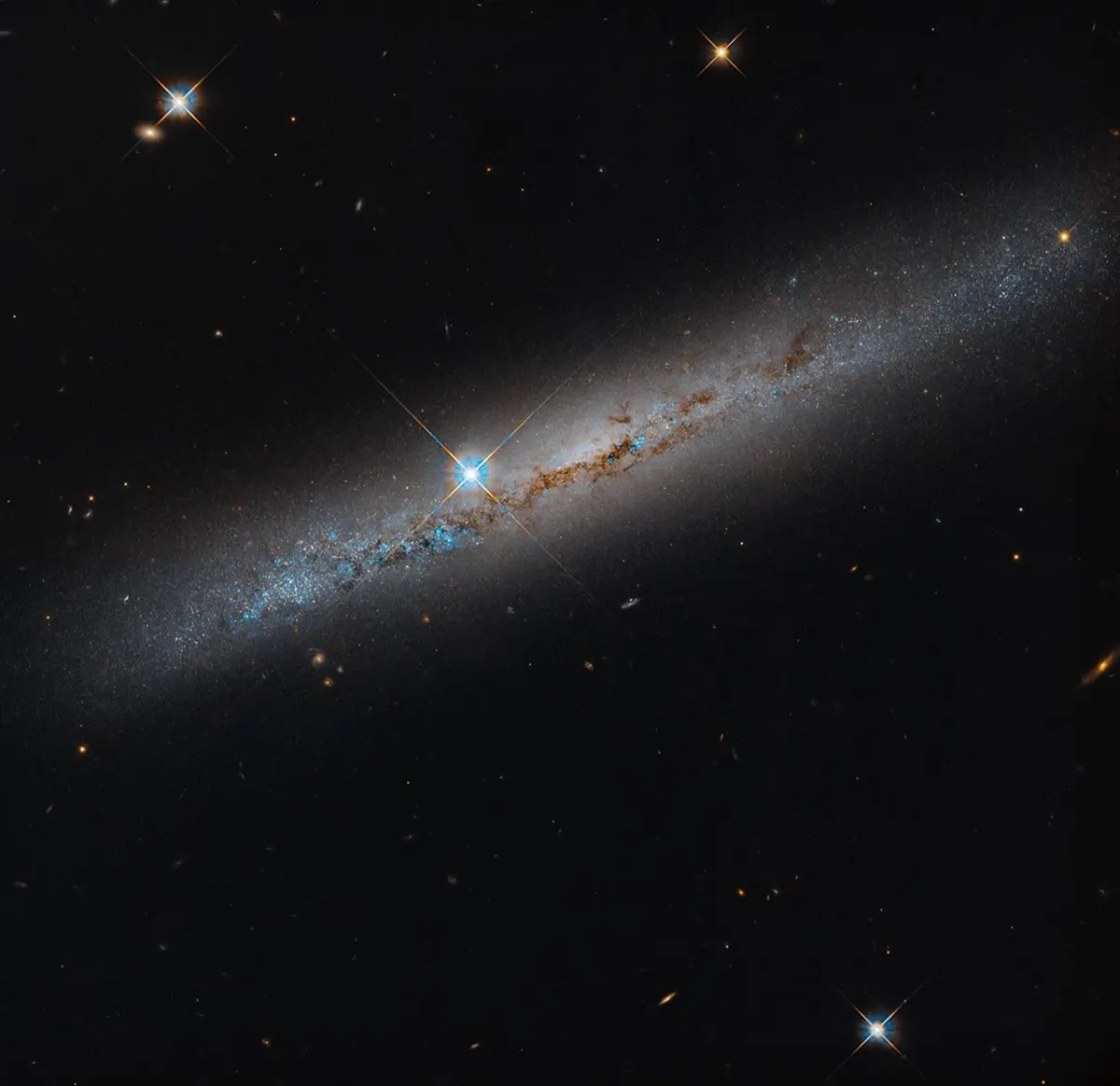
NASA’s Hubble Spies Spiral’s Edge
This NASA Hubble Space Telescope image features the edge-on, intermediate spiral galaxy NGC 1827, located roughly 37 million light-years away in the…
The uranium cubes that exposed Nazi Germany’s nuclear failure
Scientists investigating Nazi Germany's secret nuclear program have uncovered evidence that its final experimental reactor was nowhere near as close…

Rocket Report: FAA eyes more Starbase traffic; India's Skyroot snares US customer
Welcome to Edition 9.15 of the Rocket Report!