Nearly 3,000 exploding stars challenge our understanding of the Universe
A massive analysis of 2,884 exploding stars has uncovered new evidence that dark energy, the mysterious force accelerating the universe’s expansion, may…
ScienceDaily reports that a massive analysis of 2,884 exploding stars has uncovered new evidence that dark energy, the mysterious force accelerating the universe’s expansion, may change over time.
The findings challenge a cornerstone of modern cosmology and could reshape our understanding of how the universe works.
This science story centres on the United States.
Why it matters
Research developments are often early steps — further studies typically determine how significant they prove to be.
Key details
- Location
- United States · Americas
- Reported by
- ScienceDaily
- First reported
- Key names
- Universe
- Section
- Science
Sources
This is an independent summary. Read the full, original reporting from the publisher:
Read the full story at ScienceDailySpotted an error? Request a correction · How this summary was produced
Related Stories
Astronomers uncover new secrets of the Universe’s first five minutes
Scientists have achieved a major breakthrough in understanding the Universe’s earliest moments, measuring the amount of helium formed in the first…
James Webb reveals a massive cosmic structure that challenges our understanding of the Universe
NASA’s James Webb Space Telescope has revealed an ancient galaxy cluster with an unexpectedly dense concentration of dark matter, challenging…

Who's leveling up? Predicting the next wave of NHL breakout stars
From players with new linemates to young stars set to hit superstardom to enticing rookies, watch out for this group.
Scientists find a surprising clue to why the universe’s expansion doesn’t add up
Tiny magnetic fields created shortly after the Big Bang may help explain the long-running disagreement over how fast the universe is expanding.
40 years later, Chernobyl's nuclear fallout is not what scientists expected
Forty years after the Chornobyl disaster, tiny radioactive particles still linger in the soil, carrying a dangerous legacy.
Cambridge scientists create a $10 chip that could put a medical lab on your wrist
Cambridge researchers have created a groundbreaking $10 optical sensor that delivers the precision of laboratory equipment in a device small enough…
Scientists discover a hidden immune weapon against deadly lung cancer
Researchers have uncovered a hidden immune defense capable of attacking small cell lung cancer, an extremely aggressive disease that often escapes…
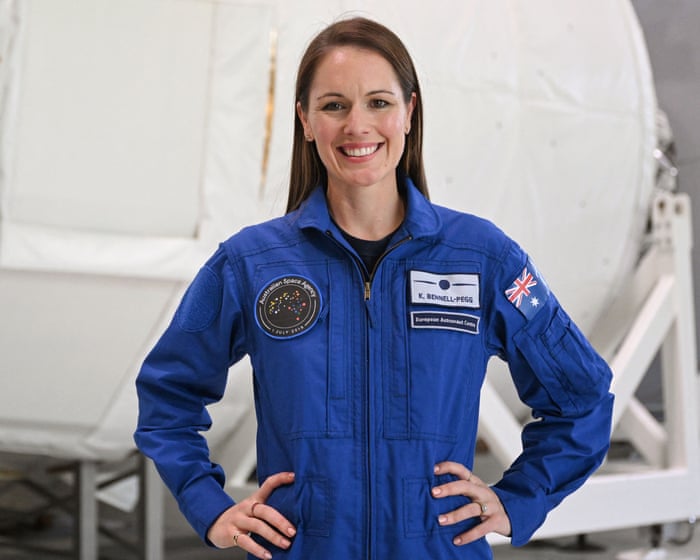
Australia offers astronaut Katherine Bennell-Pegg for space mission to International Space Station
The mission, slated for 2028, will mark the first time a qualified astronaut has flown to space under the Australian flag.