Two skulls taken to Harvard for eugenics research are returned to Brazil
The Guardian reported that two human skulls believed to belong to Africans or Afro‑Brazilians have been repatriated to Brazil after decades in the United…
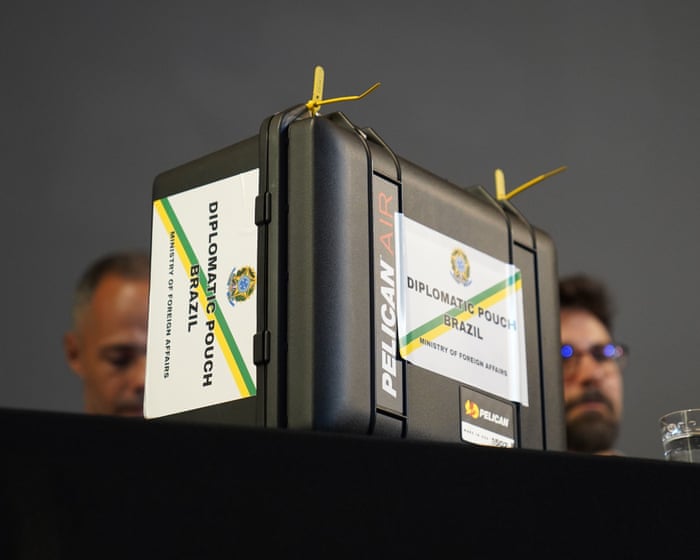
The Guardian reported that two human skulls believed to belong to Africans or Afro‑Brazilians have been repatriated to Brazil after decades in the United States. The remains, one taken about 190 years ago from Salvador, the capital of Bahia, and the other about 160 years ago from Rio de Janeiro, were flown back by diplomats and received in subdued ceremonies in both cities on Wednesday.
One of the skulls is thought to have belonged to a man who participated in Brazil’s largest slave revolt. After being removed from Brazil in the 19th century, the skulls were used in racist eugenics studies at Harvard University. Their return marks the end of a long period during which the remains were held outside Brazil.
The ceremonies were described as moving, reflecting the significance of restoring the remains to their communities after a history of exploitation and scientific misuse.
Why it matters
The repatriation addresses a legacy of colonial exploitation and the misuse of human remains in eugenics research, offering a measure of restorative justice.
Key details
- Location
- Brazil · Americas
- Reported by
- The Guardian
- First reported
- Key names
- Harvard University, Harvard, Africans, Afro-Brazilians
- Section
- Science
- Figure cited
- One was taken about 190 years ago from Salvador, the capital of the state of Bahia; the other, about 160 years ago, from Rio de Janeiro – and were welcomed back in moving… (The Guardian)
Sources
This is an independent summary. Read the full, original reporting from the publisher:
Read the full story at The GuardianSpotted an error? Request a correction · How this summary was produced
Related Stories

Young politicians of African descent make history in US midterms
BBC News reported that a group of young politicians with African roots are making history in the United States midterm elections.

Rubio says Trump administration did not help Bolsonaro flee Brazil to US
Trump says defeated presidential candidate, who faces investigation in Brazil, can stay in the US 'as long as he wants'.

Trump’s tariff pause angers some US ranchers, boosts Brazil beef imports
Just as American cattle went to market, Trump's action added unease to an industry already facing uncertainty.

USA prepares for Women's World Cup with matches against top team Spain
With less than a year until the FIFA Women's World Cup kicks off in Brazil, the U.S. women's national soccer team is testing its mettle with two…

Pakistani astronaut set to become first foreign visitor on China’s space station
Al Jazeera English reported that a Pakistani astronaut will join the Shenzhou-24 mission, becoming the first foreign national to visit China’s space…

Scientists say pink noise makes conversations more enjoyable
Scientists have identified a characteristic pattern that makes a chat feel satisfying, according to a report in The Guardian.
Archaeologist suggests British ruler who urged Roman invasion may have been a queen
The Guardian reported that an archaeologist has argued the British leader who convinced Emperor Claudius to launch the AD43 invasion was a queen…

NASA's Swift telescope set to burn up on uncontrolled re‑entry
The Guardian reported that NASA’s Neil Gehrels Swift Observatory is expected to re‑enter Earth’s atmosphere on Wednesday and burn up.